At the beginning of this class, CONG 630 at Indiana Wesleyan University/Wesley Seminary, I wasn’t sure what I would gain to help my own community since we are so small. Some of the work of looking into our ministries and our explicit and implicit acts was difficult just because we are so new. It was a challenge, but I believe that it will be rewarding as we move forward in our process. We can use these studies and timelines as a steppingstone to where we want to go next and what we don’t want to continue in our own tradition.
Some inspiration from the semester:
Will Our Children Have Faith? By John Westerhoff gives us a lot to think about when it comes to the generations behind us. What are we teaching them and how does our own current church context affect them in the long run? These are questions that I have been thinking about since the beginning of this class. At first, I thought our children were doomed according to this author. We had made too many mistakes, and the church of today is so outdated that we could not regain any traction on discipleship. I look at my own children and find that they long for more discipleship and less ritual. They have been a part of the ritual Sunday since birth. They long for relationship. Our current church context portrays that feeling of my kids and myself. So, will our children have faith? Westerhoff says, “I believe it suggests ways to engage in religious education that can insure a positive response to that question. Our children will have faith if we have faith and are faithful.”[1] Doesn’t this statement just sum it all up? We are so quick to change our ways of education and teaching of the gospel to fit our needs. We forget that when we reach the point of nothing working our faith sways and we begin to question if we are doing the right thing. God calls us to be faithful and continue to work.
Our Future:
We don’t have a large group that attends our community. We are small, but we are deep and searching. When you have a small community like that there is a tendency to give up and move on. If that were the case, then these small seeds of knowledge would be going to the wayside, and no one would benefit. As Westerhoff has shared with us, our faith is what keeps the generations of Christians going. We must stay the course and continue to teach and seek deeper discipleship.
[1] John Westerhoff III. Will Our Children Have Faith? (New York, NY. Morehouse Pub. Third Edition. 2012) P. 126
This is a term or thought that we don’t often sit and ponder about. Prior to reading an article called “What Makes Education Christian?” by James Riley Estep Jr., I was under the impression that Christian Education is the teaching of principles, values, and of the Christian faith. It aims to nurture individuals spiritually, morally, and intellectually based on the teachings of the Bible and the life and message of Jesus Christ.
Yes, this is all true, but there are some things missing. There must be Christian theology that is attached or added to the education that makes it Christian.
“each criterion’s definition and conceptualization must be informed by Scripture, Christian tradition, and theology so as to reflect a distinctively Christian quality.” Estep, Jr.
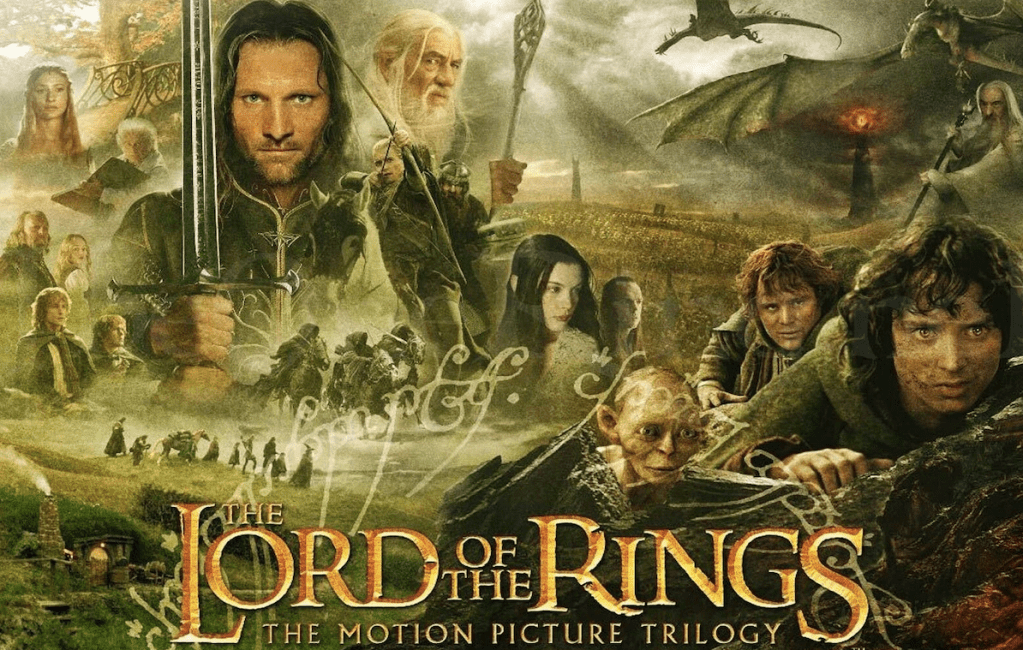
Photo credit: Ringstrilogyposter.web
Take a book or movie like TheLord of the Rings by J.R.R. Tolkien for instance. We have a book about a young hobbit named Frodo Baggins. If we read the story without the nitty gritty details, all we are reading or seeing is that there is a man that walks a long way for a long time and meets some friends on the way to somewhere. He finds a ring and good things happen.
When we add the details or real meat (theology) to the book/movie we find so much more. Frodo Baggins, a young hobbit, inherits a powerful and dangerous object called the One Ring. The ring has the power to control all other magical rings and brings corruption to whoever possesses it. To keep the dark lord, Sauron from reclaiming the Ring and conquering the Middle-earth, Frodo must go on a perilous journey to destroy it. He meets a lot of friends on the way that includes humans, elves, a dwarf, and fellow hobbits. There are many trials, battles, and betrayals, the members are separated, and each must fight their own battles against evil. While all these things are happening, Frodo and his best loyal friend, Samwise Gamgee press on toward Sauron’s realm, Mordor, where danger and corruption are growing from the Ring. Through courage, sacrifice, and hope, the story explores themes of good versus evil, friendship, power, and the resilience of the human (and hobbit) spirit. This is a much better story to tell.
Photo Credit: Te Kupenga
BOTH / AND
Photo Credit: MR Online
Christian Education needs to have Christian theology integrated into it to make it real Christian ….education. What is theology? Theology is the study of God. It explores questions of faith, the nature of God, salvation, and moral teachings, based on Scriptures. Maybe Christian education needs a little bit of social science added in as well. What is social science? Social science is a group of academic disciplines that study human society and social relationships. This includes sociology, psychology, anthropology, economics, political science, etc. Understanding both thoughts and what they can bring to education makes me lean towards the importance of the integration of both theology and social science being added to our Christian education. We must understand the nature of God and his teachings from the Scriptures as well as the context of our world through sociology and psychology. This helps us get a well-rounded education that can be used for the greater good of our society that we live in.
The level of educational theory and theology that I have received over the years in Seminary has been astronomical. I believe that at a level 3 now, I could begin to teach and share my theological convictions to those that would like a better understanding through Christian education. Areas of improvement are always present. Confidence in my own theological convictions is a place of needed improvement for me.
What are your thoughts on Christian Education? Do you think that social sciences help us become more well-rounded in our way of thinking when it comes to Christianity? How do you think you would do sharing your own theology and theories to those that are wanting more education in their life?
There came a day in my own life’s spiritual journey when I felt like there was something missing. I was going to church every week and using my musical gift as the Worship director. I was attending extra events in a large church every week and checking off those boxes that I thought needed to be checked. Something wasn’t right and there was an emptiness that remained in the hidden depths of my soul. What was that thing that was missing within me?
Discipleship and the WWE
Photo Credit: CBR
This weekend is THEE greatest Professional Wrestling event on planet earth. The annual WrestleMania event put on by WWE (World Wrestling Entertainment). Yes, I am that person, I watch wrestling. Yes, I know it’s scripted and made up, but so is the Marvel Cinematic Universe and Jurassic Park Universe, but we watch those too. Wrestling is the ultimate show between good and evil! What makes it great entertainment and fun to engage with is that each program or match is leading to, what every wrestling fan knows as, “the pay-off”. The pay-off is the culminating event that each good versus evil battle leads to, the final showdown. In professional wrestling the dream of every male and female wrestler is to have their feud end up having their pay-off in the MAIN EVENT, at WrestleMania. The main event is the most anticipated and talked about thing every year in their business. For us, at The Foundry, the most anticipated and talked about thing we participate in is, DISCIPLESHIP! Discipleship is our main event, not Sunday morning, not a service, not an outreach program, not our children’s programming, not tithing or raising money, but discipleship! If we are ever talking about anything more than we talk about discipleship than we have missed our target. Everything can be talked about and thought about, but it must be spoken about and thought about through the lens of discipleship. Just like every match leading up to the main event at WrestleMania they must be planned, talked about, and rehearsed, but all those things are done through the lens of the pay-off. Our pay-off is seeing disciples made who make disciples. Everything else is secondary.
I am now a part of a small community of believers and unbelievers that gather with the prime intention of discipleship and fellowship. We call all our meetings, missional gatherings. It is what we do. As Paul and his followers in Acts went from gathering-to-gathering fellowshipping and talking about the love and message of Christ, so we too use that example to be missional with a purpose. This is also mandated in the great commission! The width and breadth of the gospel can be met in these small gatherings because there is freedom in the movement that we are a part of. The word is spoken, prayer is uttered, worship in song is given, laughter is a given, and tears of sorrow or joy are received. Healing from the hurts of the past is being made and our souls are forever grateful. Our full intentions for these missional gatherings are to develop authentic relationships, deepen our awareness of God, and discuss our journeys with awe and wonder.
Missional Community
Photo Credit: This Old City
Our denomination is amazing and supports us in our own autonomy. We are different and they like it. How ever we can meet people where they are and in the space that they need is what is important. We attend annual conferences yearly to gain district support and knowledge as well as monthly huddles that happen in our areas. God is moving and we are here for it.
We have been in our community for several years and we know a lot of people in many different places. Our missional groups have been created to support those different places and different people while bringing them together for the same purpose. Our name is known in large places intentionally by us supporting them. We make sure that we are doing the missional work outside of our groups as well as inside.
If you are feeling like something is missing in your soul. Take some time away from the hustle and bustle of life and try to figure out what that might be. Maybe it’s a change of some sort. Are you attending your local church? Are you doing too much? Do you need more intentional discipleship in your life like I did? If yes is the answer to any of these then I invite you to make a change. Join us in one of our missional gatherings where discipleship is the main event!
We are blessed with inner rhythms that tell us where we are,
And where we are going, No matter, then,
Our fifty- and sixty-hour work weeks, the refusing to
Stop for lunch, the bypassing sleep and working deep
Into the darkness. If we stop, if we return to rest,
Our natural state reasserts itself.
Our natural wisdom and balance come to our aid,
And we can find our way to what is good, necessary, and true.
Wayne Muller, SABBATH
A person relaxing in a hammock by the water, surrounded by trees during a vibrant sunset. Photo credit: MissionCentral.ca
What is Sabbath?
Sabbath is…Rest and Worship: In today’s language Sabbath is a day of rest and renewal. Over time, since the early Jewish tradition of celebrating Sabbath on Saturday, Sunday then became the primary day of worship and rest. This practice is reflected in the Christian tradition of attending church services, taking time for reflection, and resting from work.
Sabbath gives…Spiritual Renewal: The role of Sunday as a “day of rest” focuses more on spiritual renewal and reflection on God’s grace, the teachings of Jesus, and the importance of community worship.
Theological Meaning: For many Christians, the Sabbath (or Sunday observance) symbolizes a rest found in Christ’s redemption, as described in Hebrews 4:9-10. It is not merely a physical rest but a spiritual rest, celebrating the new covenant brought by Jesus.
What happens when the Sabbath is forgotten?
Sabbath keeping is the linchpin of a life lived in sync with the rhythms. That God himself built into our world, and yet it is the discipline that seems hardest for us to live. Sabbath keeping honors the body’s need for rest; the spirit’s need for replenishment and the sou’s need to delight itself in God for God’s own sake. It begins with willingness to acknowledge the limits of our humanness and then take steps to live more graciously within the order of things.
Ruth Haley Barton, Strengthening the soul of your leadership
Our personal and corporate lack of attention to Sabbath keeping can significantly hinder our ability to experience spiritual wholeness in several ways:
Disconnection from Rest and Renewal
The Sabbath is a day of rest, a time set apart to rejuvenate both physically and spiritually. When we neglect this practice, we fail to intentionally disconnect from the relentless pace of daily life. Without a designated time for rest and reflection, we risk burning out, spiritually, emotionally, and physically. The absence of rest leads to exhaustion and makes it difficult to engage with the deeper aspects of our faith or experience moments of true spiritual renewal.
Loss of Sacred Time
Sabbath keeping isn’t just about physical rest, but it’s also a time to reorient ourselves towards God and reflect on the sacredness of life. By skipping or dismissing this practice, we fail to create space for prayer, meditation, worship, and scripture reading. This limits our spiritual growth and deprives us of opportunities to cultivate a deeper relationship with God, which is foundational to experiencing spiritual wholeness.
Disruption of Healthy Rhythms
Sabbath keeping helps create a rhythm of work and rest that nurtures spiritual, emotional, and physical balance. In a corporate or personal setting, neglecting this rhythm disrupts the flow of life and can cause us to operate in a constant state of striving and depletion. This imbalance erodes spiritual wholeness, as we are not functioning in the natural rhythm God intended for us.
Embracing Sabbath—whether personally or corporately—invites us into a deeper, more holistic experience of spiritual wholeness. By resting and focusing on God, we give ourselves space to be renewed and restored, fostering true spiritual health.
Photo Credit: womenlivingwellafter50.com
The concept of “pushing the pause button” in a world that’s “always on” can mean different things for different people, but for me, it brings a deep reflection on balance and intentionality, especially in a time where digital connectivity is relentless and often overwhelming. To be “paused” in the digital age means carving out spaces for rest, solitude, and presence—whether with others or within oneself. It’s about taking moments to disconnect from the constant stream of notifications, news, social media, and the pressure of always being available or engaged.
For me personally, the idea of “pushing the pause button” might involve consciously stepping away from technology to allow space for reflection, creativity, or simply peace. This could mean turning off notifications, spending time in nature, journaling, or engaging in activities that help center my mind and spirit away from the digital noise. It’s not about rejecting technology entirely, but rather reclaiming control over how it impacts my life and sense of well-being.
For a community of faith, being “on pause” can also be significant. Sabbath gives us time to pause and to disconnect from the busyness of life and focus on the spiritual, relational, and restorative aspects of life. In an “always-on” digital age, that idea takes on new layers. For faith communities, this could mean intentionally creating spaces for people to disconnect from the demands of work, digital life, and the speed of modern existence to come together for worship, prayer, and deepening relationships.
Pushing that pause button is not a rejection of technology, but rather an invitation to reclaim intentionality over our time and attention. It’s a way to seek balance between the demands of our always-on world and the need for spiritual, mental, and emotional well-being. So, where are you on this Sabbath journey? Do you need to push the pause button and take a day of silence from the busyness of life? Just remember that God has given you that gift. You just have to accept it.










 Reflections